Elevating Game UI Design with Versatile Linear Icon Sets for Dark and Light Modes
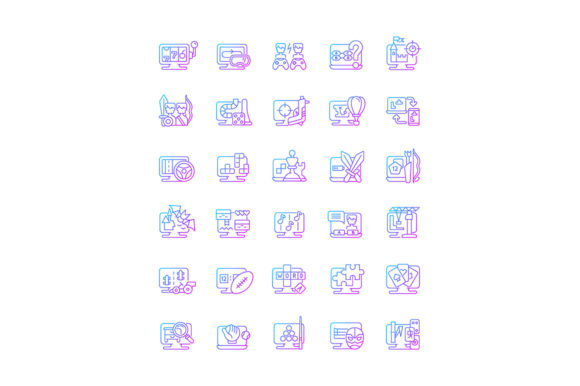
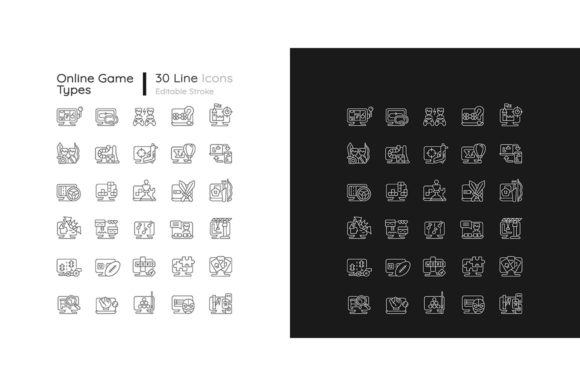
In the rapidly evolving world of digital entertainment, user interface (UI) design serves as the critical bridge between a player’s intent and the game’s mechanics. While high-fidelity 3D graphics often steal the spotlight, it is the subtle, functional iconography that guides navigation, communicates status, and maintains immersion. For developers and designers working on adventure and action titles, finding the right visual language can be a challenge. This is where specialized assets like the Online Game Types Linear Icons Set become indispensable. Designed specifically to accommodate both dark and light modes, these customizable thin line symbols offer a blend of aesthetic precision and technical flexibility that modern game development demands.
The Significance of Linear Aesthetics in Modern Gaming
To understand why linear icons have surged in popularity, one must first appreciate the shift in digital design philosophy over the last decade. We have moved away from heavy skeuomorphism—where digital elements mimicked real-world textures like leather or metal—toward flat and minimal design. In the context of online gaming, particularly in adventure and exciting action gameplay genres, screen real estate is precious. Players need to process information instantly without visual clutter obstructing their view of the game world.
Linear icons, characterized by their clean outlines and negative space, solve this problem elegantly. They are lightweight visually, ensuring they do not compete with complex background art or particle effects. However, simplicity does not imply a lack of detail. High-quality isolated vector outline illustrations manage to convey complex concepts—a treasure chest, a sword, a magical potion, or a multiplayer lobby button—with just a few deliberate strokes. This clarity is essential for maintaining the flow state in action games, where split-second decisions rely on immediate visual recognition.
Navigating Dual Themes: Dark and Light Mode Compatibility
One of the most common pitfalls in game UI design is creating assets that look fantastic in one environment but fail in another. With the widespread adoption of system-wide dark modes on mobile devices and PCs, players now expect interfaces to adapt seamlessly. An icon set designed solely for a white background may disappear entirely against a dark HUD, while an icon optimized for darkness might look washed out on a bright screen.
The Online game types linear icons set for dark and light mode addresses this duality head-on. Rather than providing two separate, disconnected libraries, professional sets are engineered with contrast ratios and stroke visibility in mind. This ensures that whether a player is exploring a sun-drenched open world in an adventure game or navigating a neon-lit cyberpunk menu in an action title, the iconography remains legible and aesthetically consistent. This adaptability reduces the workload for designers, who no longer need to manually adjust opacity or color values for every single asset when switching themes.
Technical Flexibility: Editable Strokes and Vector Formats
For experienced designers and beginners alike, the true value of an icon set lies in its editability. Raster images are static; vectors are living blueprints. The ability to utilize customizable thin line symbols means that the stroke weight can be adjusted globally or individually to match the specific art direction of a project. A gritty survival adventure might require thicker, bolder lines to convey weight and danger, whereas a whimsical puzzle platformer might benefit from delicate, hairline strokes.
This level of control is only possible when working with proper source files. Professional icon sets typically include a comprehensive suite of product file formats:
- SVG (Scalable Vector Graphics): The gold standard for web and mobile game UIs. SVGs are code-based, meaning they scale infinitely without pixelation and can be animated or styled via CSS.
- AI (Adobe Illustrator) & EPS: Essential for print materials, marketing brochures, or high-resolution promotional assets where further manipulation in vector software is required.
- PNG & JPEG: Rasterized versions provided for quick prototyping, legacy engine compatibility, or use in non-vector environments.
Having access to editable strokes in AI or SVG format allows teams to maintain brand consistency across disparate platforms. If the game’s logo uses a 2px stroke, the UI icons can be mathematically aligned to match, creating a cohesive visual identity that feels polished and professional.
Practical Applications Across Adventure and Action Genres
Different genres impose unique requirements on iconography. Understanding these nuances helps in selecting and utilizing the right assets effectively.
Adventure Gameplay Interfaces
Adventure games are often narrative-driven and exploration-heavy. The UI here acts as a storytelling device. Icons representing inventory items, quest markers, and dialogue options must feel organic to the world. Linear icons work exceptionally well here because they can be stylized to resemble hand-drawn maps or ancient runes while retaining modern usability. Because adventure games often involve reading and text interaction, the unobtrusive nature of thin line symbols prevents eye fatigue during long play sessions.
Exciting Action Gameplay HUDs
Conversely, action games prioritize speed and readability. In the heat of battle, a player cannot afford to squint at a detailed illustration to distinguish a health pack from ammunition. Here, the geometric purity of linear icons shines. They reduce cognitive load by stripping away unnecessary decoration. Furthermore, in competitive online environments, clear iconography aids accessibility, helping players with visual impairments or color blindness navigate menus and in-game prompts more effectively.
Beyond the Screen: Marketing and Educational Assets
The utility of a comprehensive icon set extends far beyond the game executable itself. In the business of game development, communication is key. Developers frequently need to create pitch decks, investor brochures, app store screenshots, and tutorial infographics. Using the same isolated vector outline illustrations found in the game ensures that marketing materials accurately reflect the product's actual user experience.
For educators and content creators teaching game design, these sets serve as excellent pedagogical tools. They demonstrate best practices in symbol design, showing students how to balance form and function. By analyzing how a professional set handles corner radii, join types, and optical corrections, aspiring designers can learn the foundational principles of iconography that apply to all areas of digital design, not just gaming.
Sourcing Quality Assets: The Role of Specialized Studios
While free resources abound, professional projects demand reliability and legal clarity. When searching for icons, brochure templates, infographic elements, or mobile app screen pages, it is crucial to rely on established providers. Studios like BSD studio have built reputations on delivering assets that meet industry standards. Choosing a reputable source ensures that you receive properly organized layers, consistent naming conventions, and valid licensing for commercial use.
A common misunderstanding among beginners is assuming all vector icons are created equal. In reality, poorly constructed vectors can have broken paths, inconsistent sizing, or excessive anchor points that cause rendering issues in game engines. Professional sets are optimized for performance and compatibility, saving developers hours of cleanup time. Furthermore, specialized studios often provide updates and expansions, allowing your asset library to grow alongside your project’s scope.
Building a Cohesive Visual System
Ultimately, integrating an online game types linear icons set is about building a system rather than just placing pictures on a screen. It requires thoughtful consideration of hierarchy, spacing, and context. Whether you are designing a minimalist indie title or a AAA live-service game, the principles remain the same: clarity, consistency, and adaptability.
By leveraging editable vector formats and prioritizing dual-mode compatibility, designers can create interfaces that are not only functional but also beautiful. These icons serve as the silent narrators of the digital experience, guiding players through epic adventures and intense battles with grace and precision. As technology continues to evolve and screens become more varied, the demand for flexible, high-quality linear iconography will only increase. Investing in premium, versatile assets today is a strategic step toward future-proofing your game’s visual identity and ensuring a seamless experience for every player, regardless of their device or preference.