Geometric Universal Brochure Templates: A Practical Guide to Modern Print Design
In the fast-paced world of visual communication, finding the balance between aesthetic appeal and functional clarity is a constant challenge for designers and business owners alike. The rise of Geometric Universal Brochure Templates has provided a sophisticated solution to this dilemma, offering a structured yet flexible framework for creating professional marketing materials. Unlike organic or freeform designs, geometric layouts rely on mathematical precision, grids, and shapes to guide the viewer’s eye, ensuring that information is not only seen but understood. Whether you are preparing an annual report, a product leaflet, or an advertising poster, understanding how to leverage these universal templates can significantly streamline your workflow while elevating the perceived value of your brand.
The Strategic Value of Geometric Layouts in Print Media
Geometry in design is more than just a stylistic choice; it is a tool for cognitive organization. When we utilize a geometric universal brochure template set, we are essentially employing a pre-calculated visual hierarchy. Circles, triangles, and rectangles act as containers for content, creating natural breakpoints that prevent reader fatigue. This is particularly crucial in dense documents like magazines or corporate booklets where text heaviness can deter engagement.
For general consumers and professionals browsing through physical or digital collateral, geometric patterns offer a sense of stability and modernity. They suggest that the organization behind the material is orderly, precise, and forward-thinking. From a practical standpoint, these templates solve the "blank page syndrome." Instead of struggling to align elements manually, designers can focus on content strategy and messaging, knowing that the underlying grid system will maintain visual coherence across multiple pages or formats.
Versatility Across Formats: From Flyers to Annual Reports
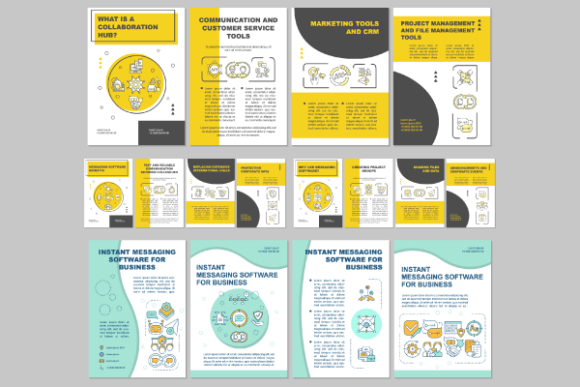
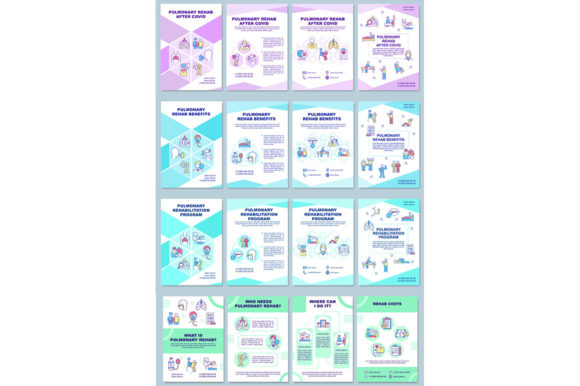
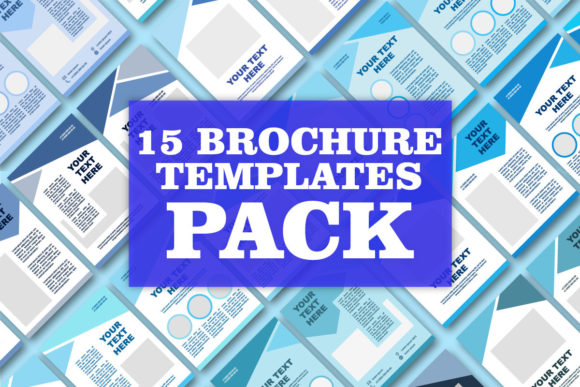
One of the defining characteristics of a high-quality universal template set is its adaptability. A robust collection typically includes 15 universal brochures that cover a spectrum of print needs. Understanding where each format fits into your marketing ecosystem is essential for maximizing return on investment.
- Flyers and Leaflets: These single-sheet formats benefit immensely from geometric boldness. Large shapes provide ample copy space for headlines and calls to action, making them ideal for event announcements or quick-service advertising.
- Booklets and Magazines: Multi-page documents require consistent master pages. Geometric templates provide recurring visual motifs that tie disparate articles or sections together, creating a unified reading experience.
- Annual Reports: Financial data and corporate summaries demand structure. Grid-based geometric layouts allow for the clean presentation of charts, graphs, and executive summaries without appearing cluttered.
- Advertising Posters: Large-format prints need to communicate instantly. Geometric abstraction can create striking negative space that draws attention from a distance while framing key promotional messages.
This versatility ensures that whether you are designing a trifold leaflet for a local clinic or a glossy magazine for a tech startup, the foundational design language remains consistent and professional.
Technical Specifications and File Format Flexibility
When selecting a geometric universal brochure template set, technical compatibility is just as important as visual style. Professional workflows rarely exist in a vacuum; they require assets that can move seamlessly between different software environments and output destinations. A comprehensive template package should always include JPEG, AI, PNG, EPS, and SVG file formats.
Understanding the specific utility of each format prevents production bottlenecks:
- AI (Adobe Illustrator): The industry standard for vector editing. This is your primary source file for customizing colors, typography, and layout geometry.
- EPS (Encapsulated PostScript): Essential for cross-platform compatibility. If your printer uses CorelDRAW or QuarkXPress instead of Adobe products, EPS ensures your vectors remain editable and crisp.
- SVG (Scalable Vector Graphics): Crucial for bridging print and digital. As web standards evolve, having SVG versions of your brochure elements allows you to repurpose print assets for responsive websites without losing quality.
- PNG: Useful for transparent backgrounds when placing geometric accents over photos or colored backgrounds in non-vector software like PowerPoint or Canva.
- JPEG: Best for quick previews, client approvals, and low-resolution digital proofs before committing to high-cost printing.
Having access to this full suite of formats means you are never locked into a single ecosystem. It empowers freelancers, agencies, and in-house teams to deliver exactly what the project requires, regardless of the final medium.
Evaluating Suitability: Is a Geometric Template Right for You?
While Geometric Universal Brochure Templates are incredibly powerful, they are not a one-size-fits-all solution. Evaluating suitability requires an honest assessment of your brand identity and content volume. Geometric designs excel at conveying innovation, technology, finance, architecture, and corporate professionalism. However, if your brand relies heavily on rustic, handcrafted, or deeply emotional storytelling, rigid geometry might feel too sterile unless softened with organic photography.
Consider the following practical expectations when adopting these templates:
- Content Density: Geometric templates often feature significant copy space. Ensure you have enough substantive content to fill these areas meaningfully. Empty geometric shapes can look unfinished rather than minimalist.
- Customization Effort: "Universal" does not mean "instant." Budget time to adjust color palettes and font pairings to match your specific brand guidelines. The template provides the skeleton; you must provide the skin.
- Print vs. Digital: Always check bleed lines and safe zones. Geometric elements that extend to the edge of the page require precise trimming. Verify that the template includes proper print-ready guides to avoid white borders on your final product.
Sourcing Quality Assets: The Role of Specialized Studios
The quality of your final output is directly correlated to the quality of your source assets. In the search for icons, brochure templates, infographic elements, and mobile app screen pages, discerning creators know that curation matters. This is where specialized resources like BSD studio become invaluable.
Relying on established studios for your design assets offers several distinct advantages over generic, uncurated marketplaces. First, there is consistency. When you download a geometric universal brochure template set from a reputable studio, you can trust that the layers are organized, the fonts are properly linked, and the vectors are clean. Second, specialized studios often provide cohesive ecosystems. If you use their brochure templates, you can likely find matching infographic elements or mobile app screens that share the same geometric DNA. This holistic approach ensures that your offline print materials and online digital presence feel like parts of the same unified brand narrative.
Furthermore, professional studios understand current print standards. They anticipate issues like color separation, transparency flattening, and font licensing, saving you from costly reprinting errors. When you count on experts for your foundational assets, you are investing in risk mitigation as much as aesthetics.
Real-World Application Scenarios
To truly appreciate the utility of these templates, consider how they function in diverse real-world scenarios. A university admissions office might use a geometric booklet template to present course catalogs. The sharp lines and organized grids convey academic rigor and institutional stability, while the ample copy space allows for detailed program descriptions. Conversely, a tech startup launching a new SaaS product might use the same geometric principles for a flyer and a landing page. The angular shapes suggest speed and efficiency, while the modular layout allows them to swap out feature highlights as the product evolves.
In the nonprofit sector, geometric templates can help organize complex impact reports. By using shape-coded sections, organizations can guide donors through financial breakdowns and success stories without overwhelming them with text. The structure acts as a navigational aid, making dense information digestible and actionable.
Making the Most of Your Design Investment
Ultimately, Geometric Universal Brochure Templates are tools designed to amplify human creativity, not replace it. They handle the heavy lifting of alignment, spacing, and structural integrity so that you can focus on what matters most: your message. By choosing versatile file formats, understanding the psychological impact of geometric design, and sourcing assets from reliable providers like BSD studio, you position your projects for success.
Whether you are a seasoned art director looking to speed up production or a small business owner creating your first annual report, these templates offer a bridge between professional standards and practical accessibility. Embrace the structure, customize with intention, and let the geometry guide your audience toward your core message with clarity and confidence. In a world saturated with visual noise, the disciplined beauty of geometric design is not just an aesthetic preference—it is a competitive advantage.