Elevating Corporate Responsibility: Designing Effective Onboarding with the CSR Related App Pages Bundle
In the contemporary digital landscape, Corporate Social Responsibility (CSR) has evolved from a peripheral public relations strategy into a core operational imperative. Modern organizations are no longer judged solely by their financial performance but by their ethical footprint, employee welfare, and societal contributions. As businesses strive to integrate these values into their daily operations, the role of digital interfaces has become paramount. This shift has created a significant demand for specialized design assets, most notably the CSR Related App Pages Bundle. This comprehensive collection serves as more than just a set of graphical templates; it represents a strategic tool for professionals seeking to bridge the gap between corporate policy and user experience through intuitive mobile onboarding.
The Intersection of Ethics and User Experience
The relevance of dedicated CSR design assets stems from a broader transformation in how employees and consumers interact with brands. We are witnessing a convergence of lifestyle values and professional expectations. Employees, particularly within the Millennial and Gen Z demographics, expect their workplace technology to reflect the same transparency and ethical standards they value in their personal lives. When an organization introduces new compliance protocols, sustainability initiatives, or rights-at-workplace guidelines, the medium of delivery matters as much as the message itself.
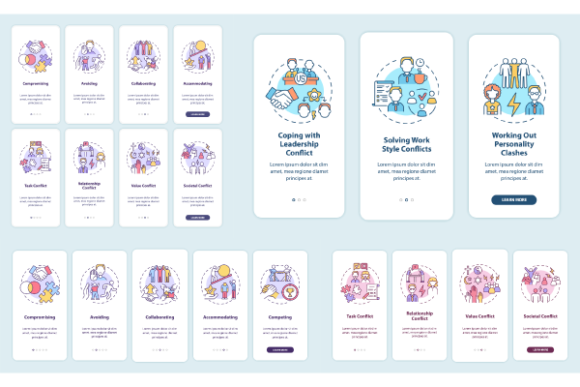
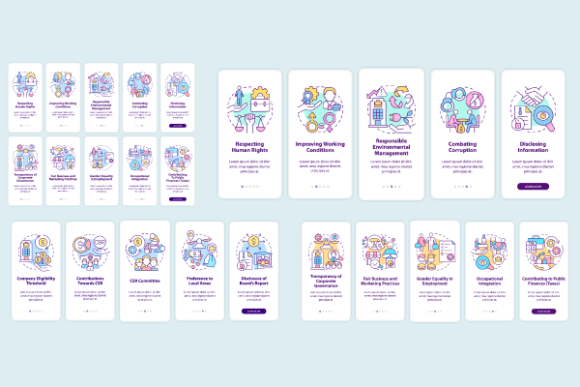
A generic, text-heavy PDF or a clunky legacy web portal fails to engage users in this new era. Instead, forward-thinking companies are adopting mobile-first onboarding experiences that feel native, accessible, and human-centric. The CSR related onboarding mobile app page screen bundle addresses this specific need by providing pre-designed, aesthetically cohesive interfaces that communicate trust and clarity. By utilizing linear color illustrations and clean GUI vector templates, designers can bypass the initial conceptualization phase and focus immediately on tailoring the content to their organization’s unique ethical framework. This alignment between visual design and corporate values is essential for fostering genuine engagement rather than mere compliance.
Streamlining Complex Workflows with Visual Hierarchy
One of the primary challenges in CSR communication is translating dense regulatory language or abstract ethical concepts into digestible, actionable information. This is where high-quality UI and UX resources become indispensable. Professionals understand that cognitive load is the enemy of retention. If an employee cannot quickly understand their rights or the steps required to report an issue, the system has failed regardless of its technical functionality.
The inclusion of specific instructional graphics, such as the Rights at workplace walkthrough 5 steps graphic instructions with concepts, exemplifies best practices in information architecture. Breaking down complex procedures into a five-step visual narrative leverages the brain's preference for sequential processing and visual cues. Linear color illustrations serve a dual purpose here: they maintain brand consistency while reducing visual noise, allowing the user to focus entirely on the educational content. For freelancers and agency creatives working under tight deadlines, having access to these structured layouts in versatile file formats like AI, EPS, SVG, PNG, and JPEG ensures that high-fidelity prototypes can be delivered rapidly without sacrificing quality or semantic accuracy.
Adapting to Changing Professional Needs and Preferences
The market for digital design assets has matured significantly. In previous years, purchasing a template pack often meant accepting a rigid, one-size-fits-all aesthetic that required extensive reworking to look professional. Today’s creators, marketers, and entrepreneurs demand modularity and scalability. They are not looking for finished products but rather sophisticated building blocks that accelerate their workflow while preserving creative autonomy.
This changing preference explains why bundles that offer multiple vector formats are gaining traction. A designer might need an SVG for a responsive web implementation, a PNG for a quick stakeholder presentation, and an AI file for deep customization in Adobe Illustrator. The flexibility inherent in the CSR Related App Pages Bundle acknowledges the non-linear nature of modern design workflows. Furthermore, as remote work and hybrid models persist, the reliance on mobile applications for internal communications has skyrocketed. Designers are tasked with creating experiences that function seamlessly across devices, making responsive, mobile-optimized screen bundles a critical component of the enterprise tech stack.
Practical Applications in Modern Business Strategy
Beyond aesthetics, these design resources facilitate tangible business outcomes. Consider a multinational corporation rolling out a new diversity and inclusion training module. Using standard stock photography often results in imagery that feels disconnected or tokenistic. By employing custom linear illustrations found in specialized bundles, the organization can create a neutral yet welcoming visual language that transcends cultural barriers and focuses on universal concepts of respect and equity.
Similarly, for startups and SMEs, budget constraints often prevent the hiring of full-time product designers for internal tools. Founders and marketers can leverage these assets to build professional-grade onboarding flows that rival those of Fortune 500 companies. This democratization of high-quality UI design allows smaller entities to compete for top talent by demonstrating a commitment to employee experience from day one. Whether it is designing an infographic for an annual sustainability report or prototyping a whistleblower hotline interface, the utility of these assets extends far beyond simple app screens. They are foundational elements of a broader corporate identity strategy.
The Value of Specialized Creative Resources
In a saturated marketplace of generic design assets, specificity is a premium commodity. Generalist icon packs and brochure templates often lack the contextual nuance required for sensitive topics like labor rights, environmental stewardship, or community engagement. Professionals recognize that saving time should never come at the cost of relevance. This is why sourcing from providers who understand niche verticals is so vital.
Count on us in search for icons, brochure templates, infographic elements, mobile app screen pages and so much more. This commitment to variety and depth ensures that creatives are not forced to compromise. When you find what you need in our shop to make sure you are saving time on design work while keeping up top quality, you are investing in efficiency without degrading the integrity of your project. BSD studio provides a variety of products, topics and file types so that there’s always something new for designers tackling emerging challenges in the CSR space. This continuous evolution of resources mirrors the dynamic nature of corporate responsibility itself, which is constantly adapting to new regulations, social movements, and technological capabilities.
Future-Proofing Digital Ethics Communication
As we look toward the future of workplace technology, the integration of AI, data privacy, and ethical governance will only deepen. The interfaces we design today set the precedent for how humans interact with these complex systems tomorrow. Utilizing well-crafted, semantically appropriate design bundles is not merely a shortcut; it is a method of ensuring consistency and professionalism in an increasingly fragmented digital environment.
The CSR Related App Pages Bundle stands as a testament to the industry's recognition that ethics requires excellent design. It empowers professionals to create onboarding experiences that are not only functional but also empathetic and aligned with the higher purposes of modern business. By leveraging these tools, creators can ensure that when an employee opens an app to learn about their rights or their company's impact, they are met with clarity, respect, and a seamless user experience that reinforces the very values the organization seeks to uphold. In doing so, we move closer to a digital ecosystem where technology serves as a true enabler of corporate conscience.