Designing for Impact: Navigating Climate Communication with Professional Template Bundles
In an era defined by environmental urgency, the ability to communicate complex scientific data effectively has become a critical skill for organizations across every sector. The conversation around global warming has shifted from abstract scientific debate to tangible economic and humanitarian realities. However, this transition brings unique challenges for marketers, educators, and policymakers. Communicators must navigate a landscape cluttered with misinformation, ranging from crisis negation to elaborate conspiracy theories that undermine established science. To address these challenges, professionals are increasingly turning to specialized design resources like the Climate Change Brochures Bundle. These tools are not merely aesthetic assets; they are strategic instruments designed to bridge the gap between dense data and public understanding.
The demand for high-quality, pre-structured visual communication stems from a fundamental shift in how audiences consume information regarding sustainability. Stakeholders no longer accept generic greenwashing or vague promises. They require transparency, verified data, and clear narratives that explain mitigation strategies without succumbing to alarmism or denialism. This is where professional template ecosystems play a pivotal role, allowing creators to focus on message integrity rather than starting from a blank canvas.
The Strategic Role of Visual Assets in Environmental Advocacy
Effective climate communication requires a delicate balance. Designers must present urgent facts without triggering psychological defense mechanisms that lead to disengagement. The Climate change mitigation brochure templates bundle serves as a foundational framework for achieving this equilibrium. By utilizing professionally crafted layouts, organizations can ensure their messaging adheres to best practices in information design, which prioritizes clarity, hierarchy, and cognitive ease.
This relevance extends beyond environmental NGOs. We are witnessing a convergence of industry, market, and consumer trends where sustainability reporting is now standard business practice. Financial institutions use these templates for ESG (Environmental, Social, and Governance) annual reports. Tech companies utilize them to explain carbon-neutral server infrastructure. Educational institutions employ them to teach media literacy against economic and humanitarian denial. The versatility of these bundles reflects the ubiquity of climate concerns in modern professional workflows.
Furthermore, the rise of digital-first consumption has altered expectations for print and vector media. Even when designing a physical leaflet or booklet, the underlying asset must be adaptable. Modern professionals expect files that work seamlessly across platforms, from high-resolution print advertisements to mobile app screen pages. This cross-functional utility is what distinguishes premium template collections from basic graphic packs.
Combating Misinformation Through Design Authority
One of the most insidious barriers to climate action is the proliferation of conspiracy theories and crisis negation. Bad actors often use polished, authoritative-looking graphics to lend credibility to false claims. Conversely, legitimate scientific communication sometimes suffers from dry, academic formatting that fails to engage the general public. High-quality design acts as a countermeasure to misinformation by establishing immediate visual authority and trust.
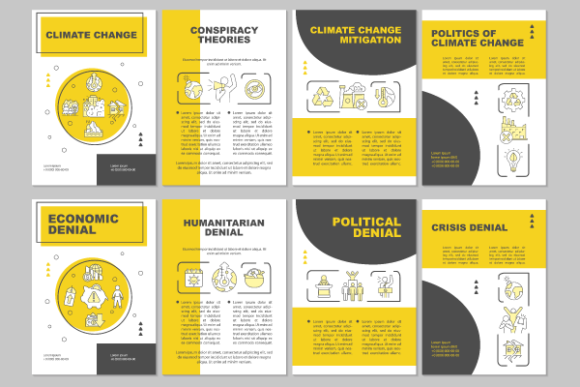
When an organization uses a cohesive Climate Change Brochures Bundle, they signal professionalism and competence. Linear icons and clean vector layouts reduce cognitive load, making it easier for readers to process factual information. This is particularly important when addressing sensitive topics like economic impacts or humanitarian crises associated with climate change. A chaotic or amateurish design can inadvertently reinforce skepticism, whereas a structured, aesthetically pleasing layout encourages engagement and retention.
Designers must also be mindful of the specific visual language used in these templates. The inclusion of linear icons and minimalist cover designs is not just a stylistic choice; it is a functional one. Minimalist aesthetics are associated with transparency and modernity, helping to distance the content from the sensationalist imagery often found in tabloid-style climate coverage. By providing neutral yet impactful visual structures, these templates empower users to present facts objectively.
Technical Versatility for Modern Workflows
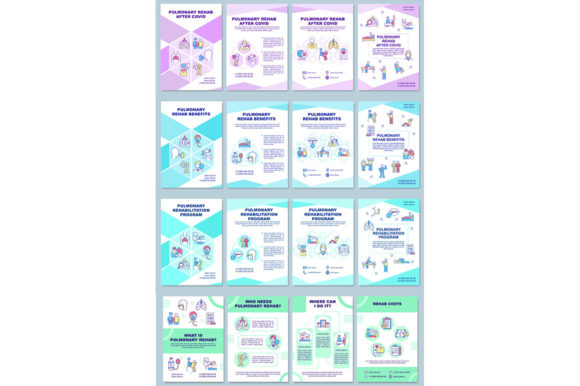
The practical value of a design resource lies in its adaptability to diverse technical environments. Professionals today operate in hybrid ecosystems where a single campaign might span physical flyers, digital PDFs, web presentations, and social media graphics. The Climate change mitigation brochure templates bundle addresses this need through comprehensive file format support, including JPEG, AI, PNG, EPS, and SVG.
- Vector Scalability (AI, EPS, SVG): Essential for large-format printing like banners or billboards, as well as responsive web design where crispness at any resolution is mandatory.
- Raster Compatibility (JPEG, PNG): Provides ready-to-use assets for quick digital distribution, email newsletters, and mobile app interfaces without requiring advanced editing software.
- Editability: Source files allow for deep customization, enabling brands to adjust color palettes, typography, and iconography to match strict corporate identity guidelines.
This technical breadth supports a wide array of deliverables. A marketing team might use the same core visual elements from the bundle to create a tri-fold leaflet for a community workshop, a multi-page booklet for investors, and a series of infographic slides for a keynote presentation. This consistency reinforces brand recognition and ensures that the core message remains stable across different mediums.
Efficiency Without Compromising Quality
Time is often the scarcest resource for freelancers, entrepreneurs, and in-house creative teams. The pressure to produce high-volume content can lead to burnout or quality degradation. Resources like those offered by BSD studio provide a solution that optimizes workflow efficiency while maintaining top-tier output standards. Instead of spending dozens of hours drawing custom icons or structuring grid systems from scratch, designers can leverage pre-built components to accelerate production.
This efficiency does not equate to generic results. On the contrary, having a robust foundation allows creatives to spend more time on the nuanced aspects of storytelling and data visualization that truly differentiate a project. When the structural heavy lifting is handled by professional templates, the designer’s energy can be redirected toward tailoring the narrative to specific audience segments, whether they are skeptical consumers, policy experts, or internal stakeholders.
Meeting Evolving Consumer and Business Expectations
The market for climate communication assets is growing because the stakes are rising. Consumers are increasingly scrutinizing the authenticity of environmental claims. Businesses face regulatory pressures to disclose climate risks and mitigation plans. In this environment, "good enough" design is a liability. Organizations need assets that convey precision, care, and forward-thinking leadership.
The Climate Change Brochures Bundle fits into this broader trend by offering a curated set of two distinct brochure templates that cover essential use cases. This focused approach prevents decision paralysis while providing enough variety to handle different content densities. One template might be optimized for data-heavy annual reports, featuring extensive chart placeholders and tabular layouts, while the other could be geared towards educational outreach with larger imagery and simpler text flows.
Moreover, the integration of infographic elements and mobile app screen pages within such collections acknowledges that climate communication is no longer confined to paper. Digital activism, app-based carbon tracking, and interactive educational tools are becoming mainstream. Designers need assets that translate effectively to smaller screens and interactive contexts. The inclusion of these elements demonstrates an understanding of current user behaviors and technological shifts.
Sourcing Reliability in a Saturated Market
With countless stock sites and template marketplaces available, finding reliable, context-appropriate assets can be daunting. Many generic repositories lack the specific nuance required for serious environmental topics. This is why specialized shops like BSD studio have gained traction among professionals. They offer a variety of products, topics, and file types curated with specific industry needs in mind.
Count on us in search for icons, brochure templates, infographic elements, and mobile app screen pages because specificity matters. When dealing with topics as complex as climate change mitigation, using generic business templates can result in tonal mismatches. Dedicated collections ensure that the visual metaphors, icon styles, and layout rhythms are appropriate for the subject matter. This relevance saves designers from the tedious process of retrofitting unrelated assets to fit a climate narrative.
Ultimately, investing in high-quality template bundles is an investment in communication efficacy. It ensures that vital messages about our planet's future are delivered with the clarity, authority, and accessibility they deserve. As the discourse continues to evolve, having access to fresh, professionally designed resources ensures that creators can keep pace with changing needs while saving time on design work and keeping up top quality. Whether combating denialism with hard data or inspiring action through compelling narratives, the right design tools are indispensable allies in the quest for a sustainable future.