Celebrate Food Day Worldwide Postcards: Designing Culinary Connections Through Vector Art
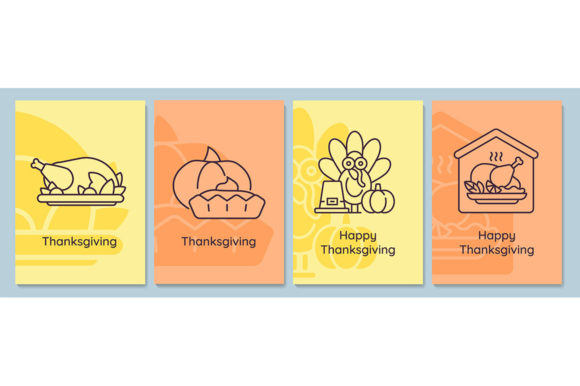
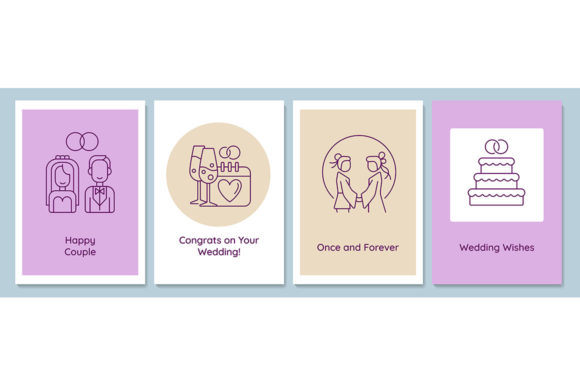
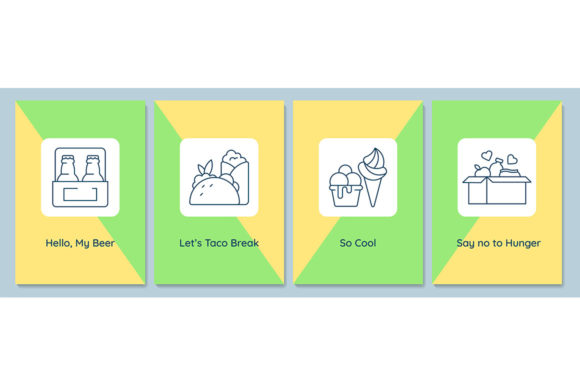
Food serves as a universal language that transcends borders, cultures, and dialects. When the objective is to honor this global connection visually, the medium of communication becomes just as important as the message itself. Celebrate Food Day Worldwide Postcards represent a specific intersection of cultural appreciation and graphic design utility. These are not merely digital images; they are structured visual assets designed to convey warmth, appetite, and international unity through precise artistic choices. For professionals ranging from restaurant owners to educators, understanding the anatomy of these postcards involves looking beyond the surface illustration to appreciate the technical versatility and strategic application of linear glyph icon sets and creative lineart.
The Strategic Value of Linear Glyph Icon Sets in Culinary Messaging
In the realm of food-centric design, realism often competes with clarity. While high-resolution photography captures texture, it can sometimes clutter a composition or fail to represent diverse cuisines equitably. This is where the linear glyph icon set becomes an indispensable tool for creators developing Celebrate Food Day Worldwide Postcards. A glyph icon reduces complex culinary concepts—such as a steaming bowl of pho, a French croissant, or a Mexican tamale—into their essential geometric forms. This reductionist approach offers distinct advantages for global campaigns.
First, linear glyphs possess inherent scalability. Because they rely on stroke weight rather than pixel density, they maintain perfect legibility whether printed on a large-format poster or displayed as a thumbnail on a mobile app screen. Second, the stylistic uniformity of a glyph set ensures visual cohesion. When designing a series of postcards representing twenty different nations, using a consistent line weight and corner radius creates a unified brand identity that disparate photographs could never achieve. This consistency signals professionalism and intentionality, reinforcing the idea that every cuisine featured is being treated with equal respect and importance.
Technical Versatility Across File Formats
The practical utility of any design asset is dictated by its file format availability. High-quality Celebrate Food Day Worldwide Postcards are distinguished by their multi-format delivery, specifically the inclusion of JPEG, AI, PNG, EPS, and SVG files. Understanding when and why to use each format is critical for maximizing the impact of holiday wishes and promotional materials.
- SVG (Scalable Vector Graphics): Essential for web-based applications and responsive design. SVGs allow the decorative vector design to scale infinitely without losing quality, making them perfect for digital greeting cards sent via email or embedded in websites.
- AI (Adobe Illustrator) and EPS: These source files are non-negotiable for professional designers who need to customize the artwork. Whether adjusting the color palette to match a restaurant’s branding or modifying the lineart to include specific text, these editable formats provide the necessary flexibility.
- PNG: With support for transparent backgrounds, PNG files are ideal for layering illustrations over colored flyers, social media posts, or menu designs without the distraction of a white box around the image.
- JPEG: Best suited for quick sharing, rasterized previews, or platforms that do not support vector rendering. It remains the standard for simple digital distribution.
This comprehensive format suite ensures that the asset is future-proof. A business owner might use the JPEG for an immediate Instagram story, while retaining the AI file for next year’s printed brochure template. This longevity transforms a single purchase into a recurring resource.
Applications Beyond the Traditional Greeting Card
While the primary association with these assets is the "greeting card with decorative vector design," the scope of application extends significantly further. The simple style poster aesthetic lends itself to various professional and educational contexts where visual engagement is paramount.
Educational and Cultural Research Tools
Educators and researchers frequently seek visual aids that are culturally accurate yet stylistically neutral. Realistic depictions of food can sometimes carry unintended biases or look unappetizing depending on lighting and styling. Creative lineart illustrations strip away these variables, focusing purely on the form and cultural significance of the dish. In a classroom setting, a flyer featuring a collage of global foods rendered in consistent lineart can serve as an engaging prompt for discussions about geography, agriculture, and tradition. Researchers compiling infographics on global nutrition or food security can utilize these icons to create data visualizations that are accessible to broad audiences, including those with cognitive processing differences who may benefit from simplified imagery.
Hospitality Branding and Menu Engineering
For restaurateurs and hospitality managers, Celebrate Food Day Worldwide Postcards offer a unique avenue for seasonal marketing. Rather than relying on generic stock photography, businesses can integrate these vector designs into menu engineering. A bistro celebrating World Food Day might use specific glyphs to denote dishes from different regions, creating a visual navigation system for diners. Furthermore, these assets work exceptionally well in physical spaces. Window decals, table tents, and staff uniforms can all feature elements from the same linear glyph set, creating an immersive environment that feels curated rather than chaotic. The "simple style" ensures that the branding complements the dining experience without overwhelming the senses.
Digital Product and App Interface Design
In the digital product space, mobile app developers and UI/UX designers require assets that load quickly and communicate instantly. Food delivery apps, recipe aggregators, and travel guides often struggle with inconsistent imagery sourced from multiple providers. Integrating a cohesive set of Celebrate Food Day Worldwide Postcards or their constituent icons provides a solution. These vectors can serve as category markers, loading states, or achievement badges within gamified learning apps. The clean lines and minimal detail reduce cognitive load, allowing users to process information faster—a critical metric in mobile interface performance.
Sourcing Quality Assets: The Role of Specialized Studios
The market is saturated with generic food illustrations, but finding assets that balance artistic charm with technical rigor requires discernment. This highlights the importance of specialized resources like BSD studio. When searching for icons, brochure templates, infographic elements, or mobile app screen pages, the reputation and specialization of the source matter. Count on BSD studio represents a directive to prioritize quality and specificity over volume.
Specialized studios understand the nuances of vector construction. They ensure that anchor points are optimized, strokes are expanded correctly for scaling, and color modes are appropriate for both print (CMYK) and digital (RGB) outputs. Moreover, they often possess a deeper understanding of cultural representation, ensuring that the "worldwide" aspect of the postcards is handled with authenticity rather than caricature. For professionals whose reputation depends on the quality of their output, verifying the provenance and technical integrity of design assets is a necessary step in the workflow.
Design Considerations for Effective Implementation
Acquiring the right Celebrate Food Day Worldwide Postcards is only the first step; implementing them effectively requires adherence to design best practices. When utilizing creative lineart illustration, negative space is as important as the line itself. Overcrowding a flyer with too many icons diminishes the impact of each individual element. Designers should aim for a balanced composition where the eye has room to rest.
Color psychology also plays a pivotal role. While the base asset may be a linear glyph, the color fill applied to it carries emotional weight. Warm tones like terracotta, saffron, and olive green evoke appetite and tradition, while cooler tones might suggest freshness or modernity. Customizing the color palette of the provided AI or EPS files allows creators to tailor the mood of the greeting card or poster to their specific audience. Additionally, typography pairing is crucial. The clean, geometric nature of linear glyphs typically pairs best with sans-serif typefaces or elegant serifs. Avoiding overly ornate display fonts prevents visual competition between the text and the illustration.
Finally, accessibility must remain a priority. Even when using decorative vector designs, alt text for digital versions and high-contrast ratios for printed materials ensure that the celebration of food is inclusive. The simplicity of lineart naturally supports high contrast, making it an excellent choice for accessible design when paired with thoughtful background colors.
Ultimately, Celebrate Food Day Worldwide Postcards function as more than just festive stationery. They are versatile, technically robust design systems that facilitate cross-cultural communication. By leveraging the precision of linear glyph icon sets, utilizing diverse file formats, and sourcing from reputable creators, professionals across industries can craft messages that are as nourishing to the mind as food is to the body. Whether used to educate students, guide app users, or delight restaurant patrons, these assets prove that in the world of visual communication, simplicity often yields the most profound impact.